
The first chapter of immersive storytelling may be coming to an end — and that might not be a bad thing. After a decade of headsets, controllers and increasingly elaborate virtual worlds, the technology may finally be getting out of the way.
At Venice Immersive’s tenth anniversary, the Immersive consultant Michel Reilhac believes the next chapter begins with a far more ordinary pair of glasses. “We thought that by 2025 the decisive change would happen,” he says. “We thought immersive would become a widespread practice and everybody would be wearing glasses.” The prediction was early rather than wrong, indeed the shift is finally happening.
The device that best embodies that transition is XREAL AURA, XREAL’s first wired XR glasses powered by Google’s Android XR platform. AURA, which XREAL says is coming in fall 2026, uses a 70-degree optical see-through display, full 6DoF spatial tracking and a split-compute architecture that moves high-performance processing into a separate pocketable unit, keeping the eyewear itself at roughly 95 grams.
For Reilhac, the significance is not the specification sheet. “The goal has always been to take away the heaviness of the headset and have something more elegant, lighter, easier to use,” he says. “And this is starting now.” That changes the question. For years, immersive storytelling meant entering another world — but what happens when the technology becomes light enough to stay with you in this one?
The end of the first chapter
When Venice introduced its VR Theatre in 2016 and launched its official XR competition in 2017, the headset was almost inseparable from the artwork. The device was part of the spectacle; experiencing the technology was itself a novelty. A decade later, Venice Immersive looks increasingly different.
The Biennale’s 2026 programme includes 68 projects from 26 countries, with 30 in competition and 35 in Best of Immersive, divided between Best of Experiences and Best of Worlds, plus three Biennale College Cinema – Immersive projects. The selection now spans virtual reality, mixed reality, immersive installations and virtual worlds, and a growing number of works that do not depend on a conventional headset at all.
For Reilhac, that expansion marks a deeper change. “What happened during these ten years was not simply the birth of a new language or a new art form,” he says. “It was the possibility for a technology to become a tool to access emotions, feelings and shared ideas.” In other words, the technology has stopped being the story, because the artists are.
Liz Rosenthal, consultant of Venice Immersive as well, sees the same evolution through the people who have entered the field. “We’ve started something,” she says. “We’ve opened up dialogues and brought together different disciplines, forms and artists that had never been seen together in this way before.” That openness has always been part of Venice Immersive’s identity. Its curators have deliberately moved between cinema, performance, game design, visual art and social virtual worlds rather than treating XR as a self-contained industry. Which is why the tenth anniversary feels less like a birthday than a threshold. The first chapter was about discovering what immersive technology could do. The next one is about what happens when the technology becomes ordinary.
Two works point forward
This year, two works in competition make that transition particularly visible. Nevatars, directed by Andy Serkis and Josh Nelson Youssef, is a 31-minute mixed-reality work designed for XR glasses and installation. Its heroine, Aya, hides her most personal creations in a forgotten digital folder. When one of those discarded characters finds its way back into her world, the story turns into a meditation on perfection, identity and the things artists leave behind.
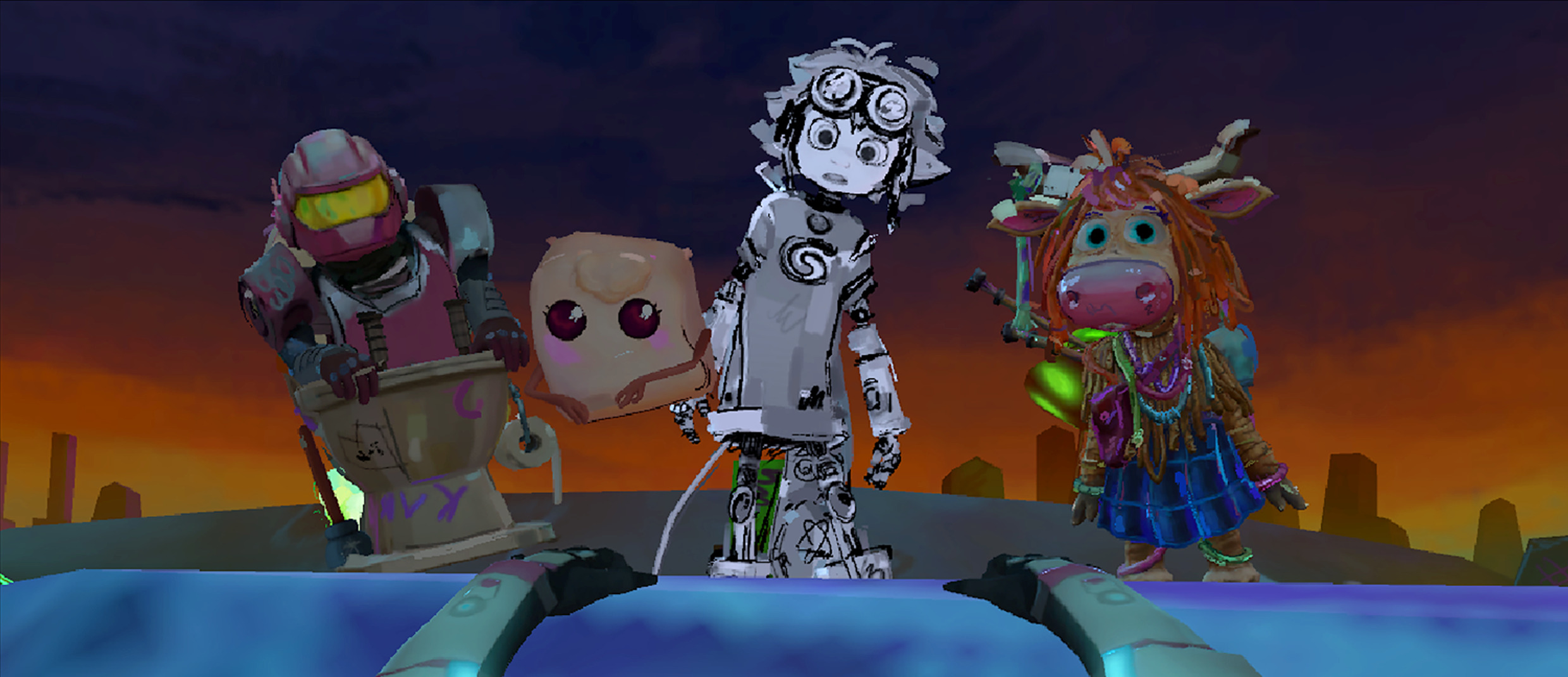
Nevatars – Andy Serkis & Josh Nelson Youssef
The work brings together an unusually recognisable cast — Josh Gad, Daisy Ridley, Kathleen Turner, Kelly Marie Tran, Aisling Bea and Andy Serkis, among others — with a production team spanning Imaginarium Productions, Boona, Google – 100 Zeros and 3DAR.
Then there is Galapagos: The Last Eden, directed by Anthony Geffen and narrated by Margot Robbie. The project turns a natural-history documentary into a spatial experience, allowing audiences to explore the volcanic birth of the archipelago and its marine life rather than simply watching it unfold on a flat screen. It too is designed for XR glasses and installation.
The two projects could hardly be more different. One is about abandoned digital worlds. The other begins with one of the most extraordinary physical environments on Earth. Yet both point to the same possibility: immersive storytelling may no longer require the audience to disappear from the real world. The interface can become part of the world around us.
When technology disappears
That may also explain why some of the most interesting works in this year’s selection are the least interested in showing off their technology. Nothing to See Here, by Celine Daemen, is an eight-minute installation that turns the act of looking into an uncanny encounter between the real and the virtual. Octopocalypse, by Max Sacker and Arite Szadkowski, pushes installation toward an embodied experience. Outrenoir, by Gordon, uses the voice of Isabelle Huppert in a work connected to the paintings of Pierre Soulages. And Sunset Motel, by Gilles Jobin, brings VR into a choreographic universe where movement becomes part of the narrative language.
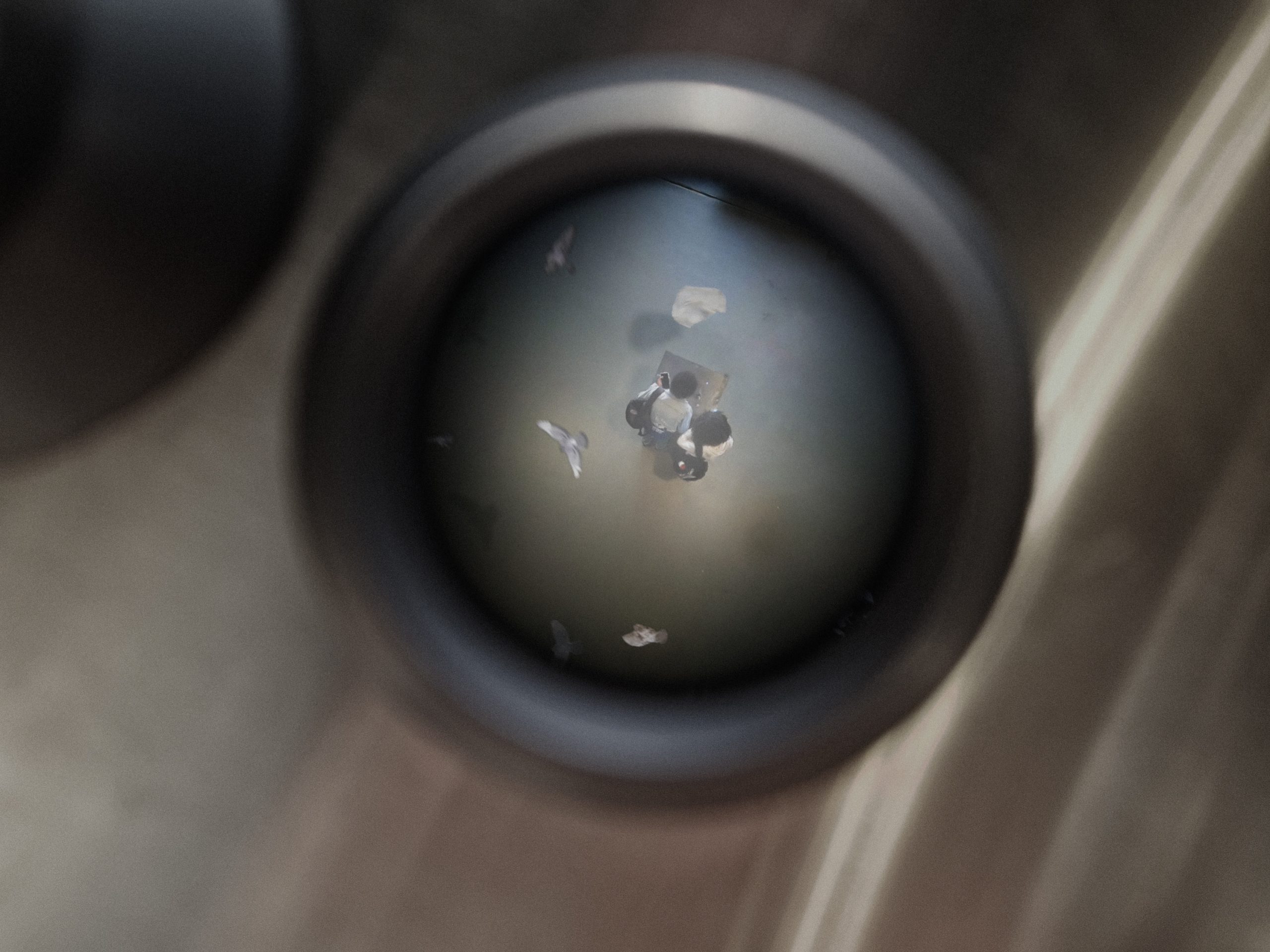
Nothing to See Here – Celine Daemen
The same tendency can be seen elsewhere in the Competition. Being In You, by Michał Stankiewicz, explores presence and intimacy through VR and installation. Finding Frida, by Hilde K. Kjøs, draws on the work of Norwegian textile artist Frida Hansen, creating a dreamlike world inspired by her tapestries. Nel Blu, by Fins, uses VR to rediscover something as simple — and increasingly rare — as curiosity. Ulrica and Yesterday Maybe approach perception and space from radically different directions.
The diversity matters. Venice Immersive is not defining a genre by a particular device, but a field by what happens to the person experiencing it.
From archive to world
There is also something revealing in the way Venice is treating cultural memory. Bowie: Unseen | Unheard, by Denis O’Regan, Nick Ryan and Joe Crossley, transforms David Bowie’s photographic and musical legacy into a spatial audiovisual experience. The installation uses L-ISA spatial audio technology by L-Acoustics, making sound part of the architecture of the work rather than simply an accompaniment to images.
Elsewhere, Smithsonian Starstruck: An Immersive Experience, by Elliott Mizroch, takes audiences into the world of astronomy through VR, while Empire at Sea, by Peter Flaherty, is an interactive mixed-reality drama about climate scientists attempting to build a sustainable community on an offshore oil rig after a catastrophe destroys the mainland. Commissioned by Lincoln Center, it features Orlando Jones, Ayelet Zurer and Beth Grant.
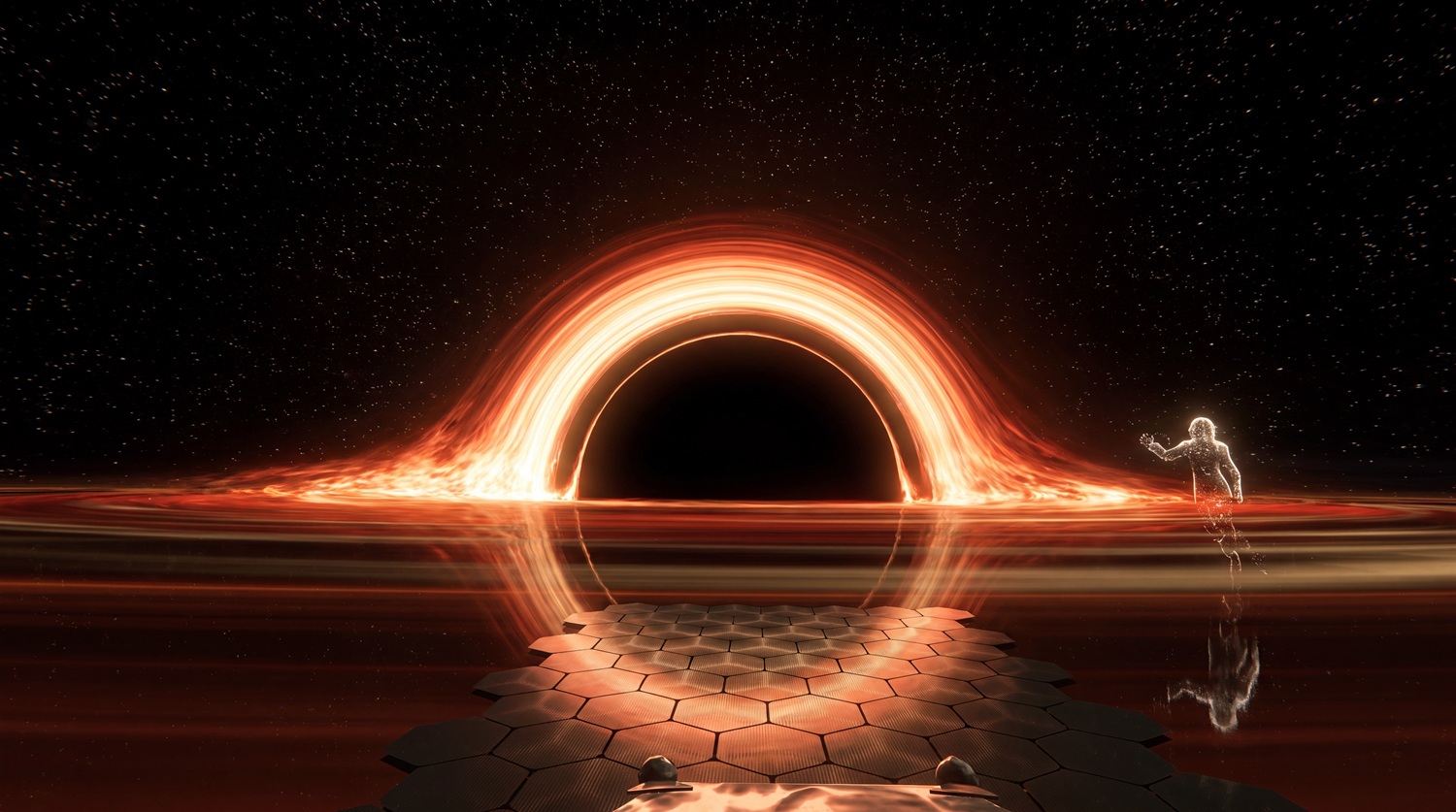
Smithsonian Starstruck: An Immersive Experience – Elliott Mizroch
These works, beyond digitising cultural material, are turning knowledge, memory and place into environments. That is one reason Rosenthal believes VRChat has become so important to the curatorial process. “VRChat has been very important to us,” she says. “Because these are people native to spatial environments and spatial design.” The distinction is crucial: an artist trained to work on a flat screen thinks first about composition inside a frame. A native spatial artist thinks about where a body goes, how it moves, what it sees and who else is there. That marks a different grammar.
The business problem
There is, however, one obstacle that technology alone cannot solve: distribution. Cinema solved this problem by building an infrastructure around a standardised object. A film can travel from a festival to a cinema, from a cinema to television, from television to streaming. Immersive works have historically been much harder to move. They require rooms, hardware, installation teams and carefully designed environments.
That is why the curators are watching Location-Based Entertainment so closely. Free-roaming installations allow audiences to move physically through mapped environments while their movements are translated into virtual space. The model is beginning to establish itself as a viable commercial market, with location-based venues emerging internationally. It works because audiences are paying for an experience, not simply a file.
But the home market remains the unresolved question. What happens when the experience can travel with you? That is where glasses become more than another piece of hardware: they could become a new distribution model. Rosenthal rejects the idea that the end of the headset would mean the death of VR. “When some people say, ‘VR is dead,’ I think that is really inaccurate,” she says. What artists have learned over years of working in immersive, she argues, “is moving into these new forms, like smart glasses.” The first chapter, then, may not be disappearing so much as migrating.
An island between industries
Venice is unusually well placed to document that migration because its Immersive Island can hold together experiences that would otherwise belong to completely different cultural ecosystems.
The competition includes Solwata, by Felix Gaedtke and Gayatri Parameswaran, a mixed-reality work connected to the Solomon Islands and featuring Mark Ruffalo; Spymaster and The Amusement, both in Best of Experiences; The White Saboteur, developed through Biennale College Cinema – Immersive; and a wide range of virtual worlds in the Best of Worlds selection. The result is more than cleanly defined medium, it is a microcosm.
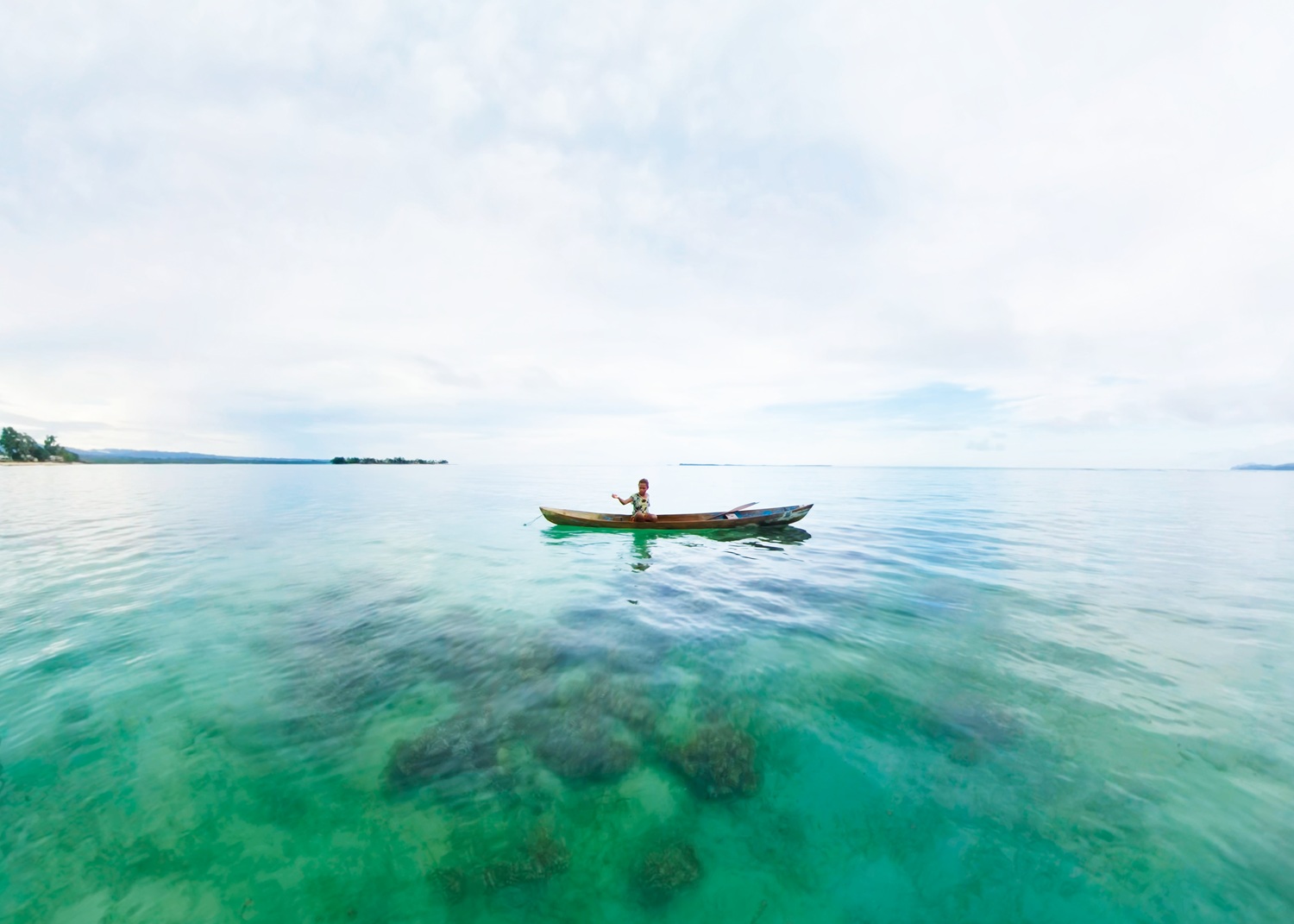
Solwata – Felix Gaedtke & Gayatri Parameswaran (Image copyright Human Rights Watch Inc.)
Cinema is part of it. Gaming is part of it. Contemporary art, theatre, music, documentary and social platforms are part of it too. That may be why Reilhac resists the idea that Venice should simply be building a canon. The role, he suggests, is closer to building bridges. And perhaps that is the real achievement of the first decade. Instead of creating an industry that can be neatly separated from everything else, generate a space where previously separate practices can collide.
The real revolution is not the glasses
The most interesting thing about XREAL AURA, then, may not be that it is lighter. It is that it points to a world in which immersive media no longer needs to look like immersive media. Its optical see-through display leaves the physical world directly visible. Its computing is split between the glasses and a separate puck. Its sensors track movement and hand gestures. Its software runs on Android XR. In principle, the hardware is becoming less like a piece of exhibition equipment and more like a wearable computer. That is a profound change in the logic of the medium.
A headset creates a boundary. Glasses create an overlay. One asks you to enter. The other asks what can happen when the digital and the physical occupy the same field of vision. That is why Reilhac calls this the beginning of the next chapter. Not because the technology is finally perfect, but because it is finally becoming invisible.
The next ten years
Ten years ago, the question was whether VR could become an art form. That question has largely been answered. The more difficult question now is what happens when immersive storytelling leaves the exhibition space and becomes part of ordinary life. When the glasses become light enough to wear all day. When the hardware stops looking futuristic. When the distinction between a virtual environment and the physical world becomes less obvious.
For Rosenthal, the future is also about the relationships these environments make possible — how people meet, create identities and inhabit spaces together. For Reilhac, it comes back to the body. He is currently researching what he calls presence design: the different ways a person can be present inside a virtual experience. “I’ve identified 14 ways,” he says. “And I know there are more.”
That may be a better way of thinking about the future than asking what the next headset will look like. Because the next frontier is not the image, but presence. Venice Immersive has spent a decade teaching audiences how to enter the story. The next challenge begins when the story no longer has to be somewhere else.
What happens when the world itself becomes the interface?